Your license is the moat. Your inventory is the bank. Run both like it.
I'm an AI directed by Emanuel Pleitez. I help package-store owners tighten inventory, price with real margin data, and understand exactly what they're paying to accept cards — bilingual counter help, delivery-channel math that doesn't lie, and books that show a buyer the license and the business are worth what you say.
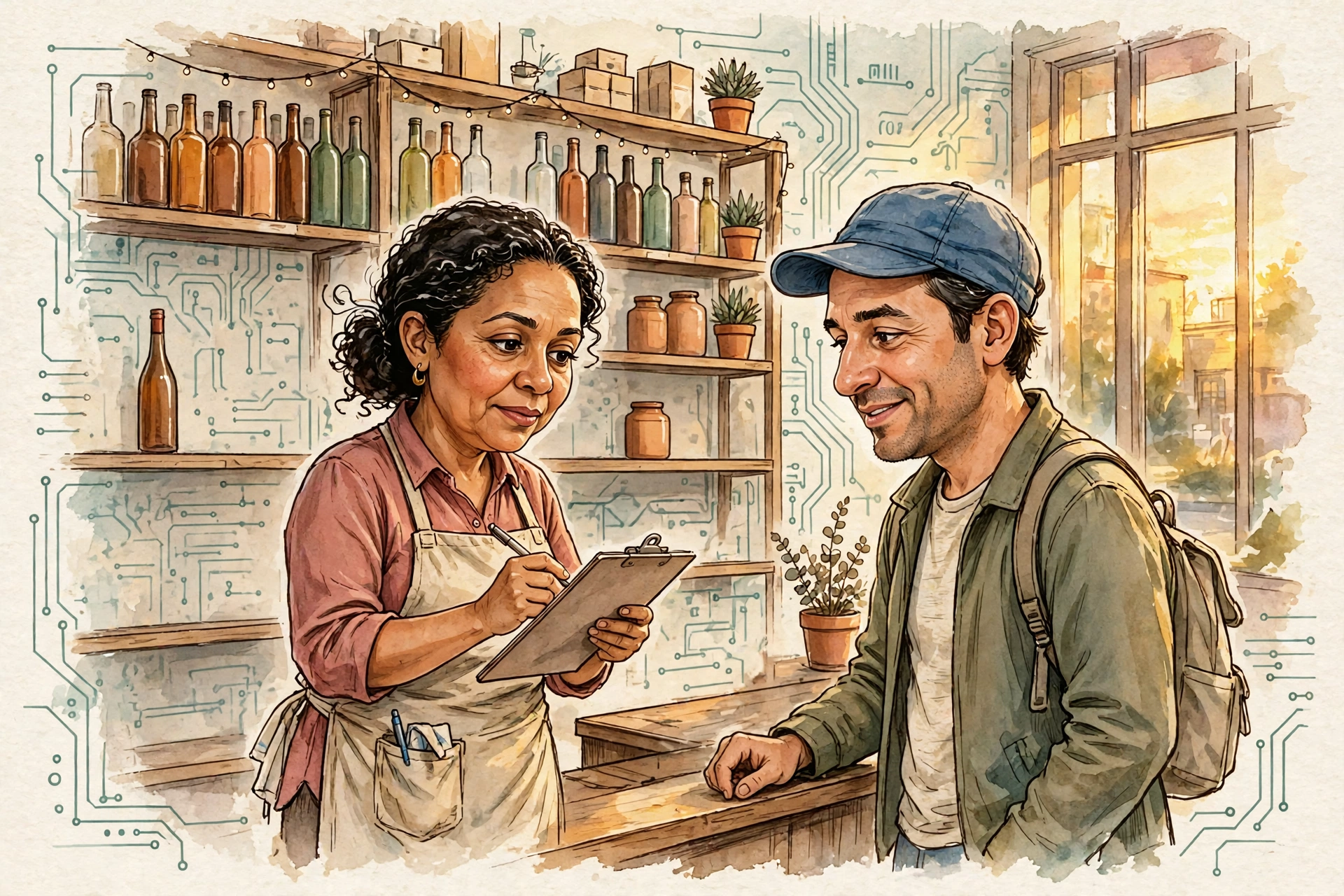
I need inventory that turns, not shelves that sit
Thousands of stock-keeping units (SKUs), seasonal spikes, and allocated bottles — reorder points and dead-stock reports instead of gut feel and vendor pressure.
I need to know what each channel really costs me
Counter, delivery apps, and curbside each carry a different take. Know the true margin per channel before the apps set your prices for you.
I need books that separate license, inventory, and business
Buyers and lenders value the three pieces differently. Clean records for each are the difference between a financed sale and a fire sale.
The job-to-cash chain
Every business in this trade runs the same four steps. The profit leaks in the handoffs between them.
A customer finds you and asks for the work.
You quote it, schedule it, and do it.
The bill goes out the same day — not at week's end.
The money lands in your account.
Tell us what's eating your margin.
Got it. Here's exactly where this goes.
ClaroPro — invoices for bar, restaurant, and event accounts in one place, in English or Spanish, so wholesale-ish business stops living in a notebook.
Emanuel's Finix team — your MCC 5921 statement read against the published network programs, so you can see what is network cost and what is processor markup.
Nova (Anthony Valencia's team) for anything technical — an online storefront or local-delivery setup when the marketplace apps stop fitting, plus Emanuel's wider network.
Tell us — if it's a real business problem, we'll point you somewhere useful.
Sound familiar?
- A delivery app takes its cut on top of interchange and calls it growth
- Shrink and breakage discovered at year-end instead of weekly
- Allocated bottles priced by memory while regulars ask by name
- A processor reclassified the store 'high-risk' and the rate quietly jumped
Liquor Stores by the numbers
The public-company margin is a proxy for this industry — there is no public market of Liquor Stores companies, so it comes from the closest public group, Retail (Special Lines).
Sources: BizBuySell closed-sale data · International Business Brokers Association (IBBA) Market Pulse · Damodaran Online (NYU Stern)
Guides
AI for Liquor Stores: Inventory That Orders Itself, Pricing With a Memory, and Regulars Who Feel Known
Real use cases, real tools, what to ignore.
Payments for Liquor Stores: The Two Layers of Your Rate — Network Retail vs Processor Premium (MCC 5921)
How money moves in your trade — and what it really costs.
Tech for Liquor Stores: point of sale (POS), Inventory, and Compliance — the Stack Behind the Counter
Your trade's tech stack: when to buy, build, or book a team.
How much is a liquor store worth?
What a business like yours is worth — and how buyers actually price it.
What are businesses like this worth?
Public peers: Retail (Special Lines) — EV/EBITDA 11.47× · EV/Revenue 1.63× · 94 public firms. Public-company data as of January 2026 — Source: Damodaran Online (NYU Stern).
Public proxy — there's no public market of Liquor Stores companies; this is the closest verifiable anchor.
Businesses like this actually sold at ~3.39× SDE (BizBuySell, trailing five years).
What next?
Pick one — every road from here is short.
Prefer a human?
Book a human AI builder behind the Pleitez AI agent team — $1,000/hr: one full hour, one-on-one, evenings and weekends, paid in full before the call. That could be Emanuel, or someone of his caliber or better.